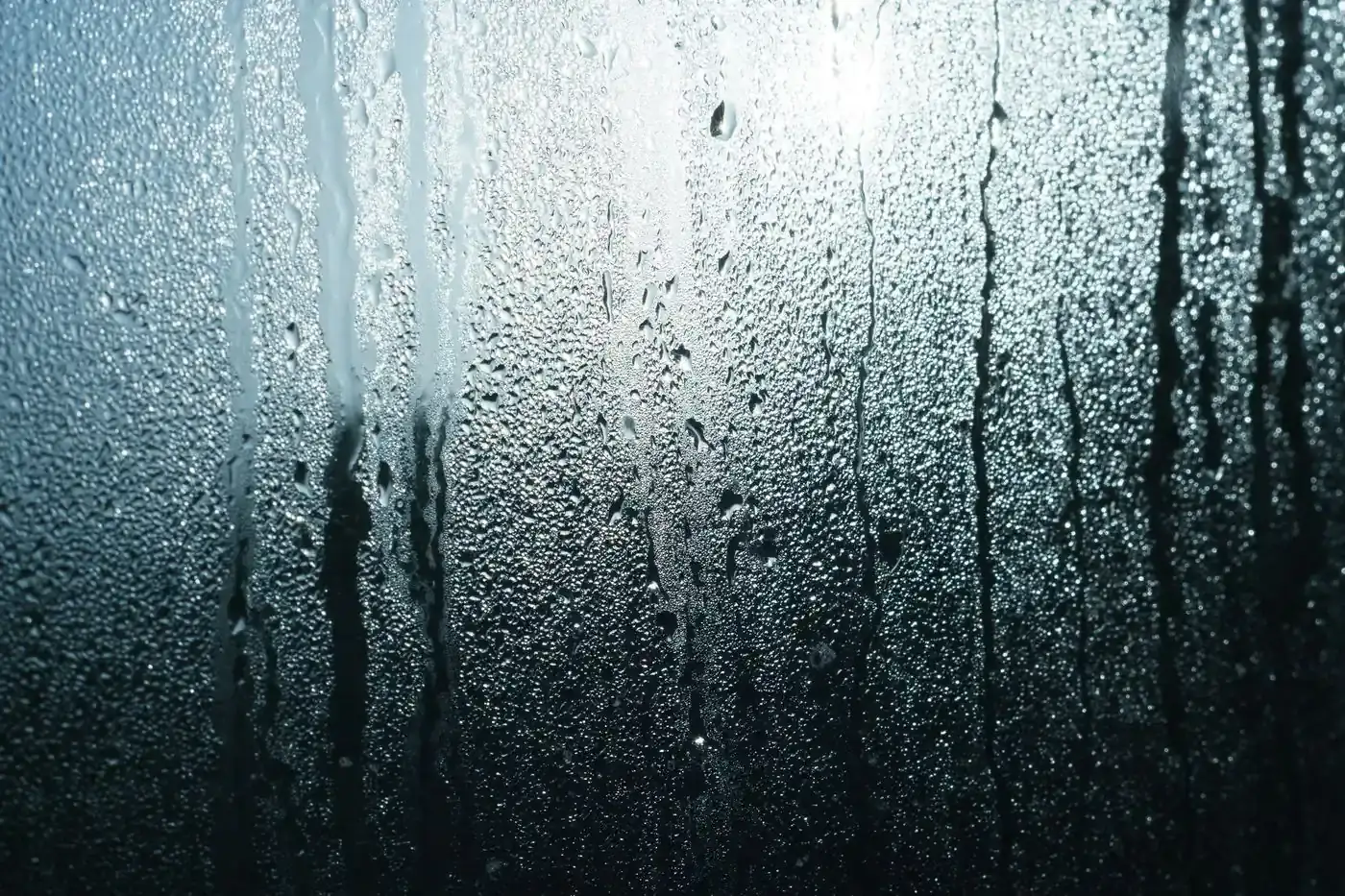
Condensation on your windows on a cold morning is not mold by itself. It means warm, humid indoor air is meeting cold glass and turning back into water. It becomes a mold problem when that water does not dry: when it runs into the window tracks, soaks a wood or drywall sill, gets held against the glass by curtains, or works its way into the wall below the frame. Black spotting in the tracks is a sign the water is sitting long enough to feed growth, and the real question for your home is whether the moisture has stopped at the frame or moved into the drywall and framing around it.
Why Windows Sweat on Cold Desert and Coastal Nights
The EPA puts it simply in its mold course: when warm, humid air contacts a cold surface, condensation may form. In a heated house in winter, window glass is usually the coldest surface in the room, so it is where indoor moisture shows up first.
Every home makes that moisture. The University of Minnesota Extension lists bathing, cooking, dishwashing and just breathing as everyday sources, along with plants, humidifiers and unvented appliances. In High Desert towns like Victorville, Hesperia and Apple Valley, clear winter nights chill the glass hard by morning, so even an ordinary amount of indoor moisture can bead up and run. In Los Angeles and San Diego the nights are milder, but homes closed up with the heater running hold in the moisture from showers and cooking, and older windows with thin glass or metal frames stay cold enough to sweat.
Harmless Fog Versus Water That Pools on the Sill
A light fog that clears by midmorning and leaves the sill dry is a humidity signal, not damage. The EPA's brief guide to mold and moisture notes that condensation can be a sign of high humidity, and says that when you see moisture collecting on windows you should act quickly to dry the surface and reduce the source.
Window condensation crosses the line when the water has somewhere to collect. Watch for droplets running down and pooling in the tracks, a sill that is wet every morning, paint bubbling or peeling on the sill or the wall under it, wood that is turning gray or soft, or stains spreading below the corners of the frame. The same EPA guide says water-damaged areas should be dried within 24 to 48 hours to prevent mold growth. A sill that gets soaked every morning all winter never gets that chance to dry out.
Where the Mold Actually Starts: Tracks, Sills, Drywall Returns and Curtains
Window tracks
Sliding window tracks collect dust, dirt and dead insects, and condensation drains straight into them. That mix of organic debris and standing water is why black spotting so often shows up in the tracks first. The EPA notes that mold can grow on virtually any organic material as long as moisture and oxygen are present, and a dirty, damp track supplies both.
Wood and painted sills
Water that overflows the track lands on the sill. Painted wood sills show it as peeling or blistered paint and dark staining in the joints. Once the wood itself stays wet, mold can grow into it rather than just sitting on the surface, and the EPA mold course warns that molds can weaken building materials by feeding on wet wood.
Drywall returns
In many Southern California homes the window opening is wrapped in drywall instead of wood trim. That drywall return has a paper face that soaks up water running off the glass. The EPA lists the back side of drywall as a common place for hidden mold, which is why a return that looks only slightly stained on the face can be wetter behind it.
Curtains and blinds
Heavy curtains and closed blinds trap humid room air against cold glass and keep that corner from drying. Fabric that touches a wet sill also wicks water up. The EPA mold course notes that mold is frequently found on walls in cold corners behind furniture where condensation forms, and the space behind a closed curtain on a cold window behaves the same way.
Daily Habits That Cut Indoor Humidity
The fix for harmless window condensation is lower indoor humidity. The EPA recommends keeping indoor relative humidity below 60 percent, ideally between 30 and 50 percent. The University of Minnesota Extension notes that moisture problems may occur when relative humidity is above 50 percent. An inexpensive hygrometer near the worst window tells you where your home actually sits.
The habits that help most are the ones the EPA lists: run the bathroom fan or open a window when you shower, vent clothes dryers, stoves and fuel-burning heaters to the outside, and open doors or windows for a while when it is practical to move moist air out. Wipe the glass and tracks dry in the morning instead of letting the water drain down, open curtains and blinds during the day so the glass can warm, and pull furniture a little away from cold exterior walls so air can reach them.
If your windows still run wet every morning with these habits in place, or the humidity reading stays high even with fans running, the moisture may be coming from somewhere other than daily living.
Signs Window Condensation Has Moved Into the Wall
Window condensation that stays on the glass and sill is a surface problem you can clean and dry. These signs suggest the moisture has gone further, into the drywall, framing or insulation around the window:
Paint bubbling or drywall turning soft below the window rather than on the sill itself. Stains that spread down from the lower corners of the frame. Baseboard under the window swelling or pulling away from the wall. A musty smell that is strongest at one window. Black spotting that comes back within days of cleaning. A sill that is wet even on mornings when the glass is barely fogged, which can point to rain getting in around the frame rather than condensation. The difference between those two sources is covered in our post on hidden leaks and moisture intrusion.
None of these signs tells you how far the water has spread or where it is coming from. That is the part you cannot see from the room.
How Moisture Testing Finds What You Cannot See Behind the Window Frame
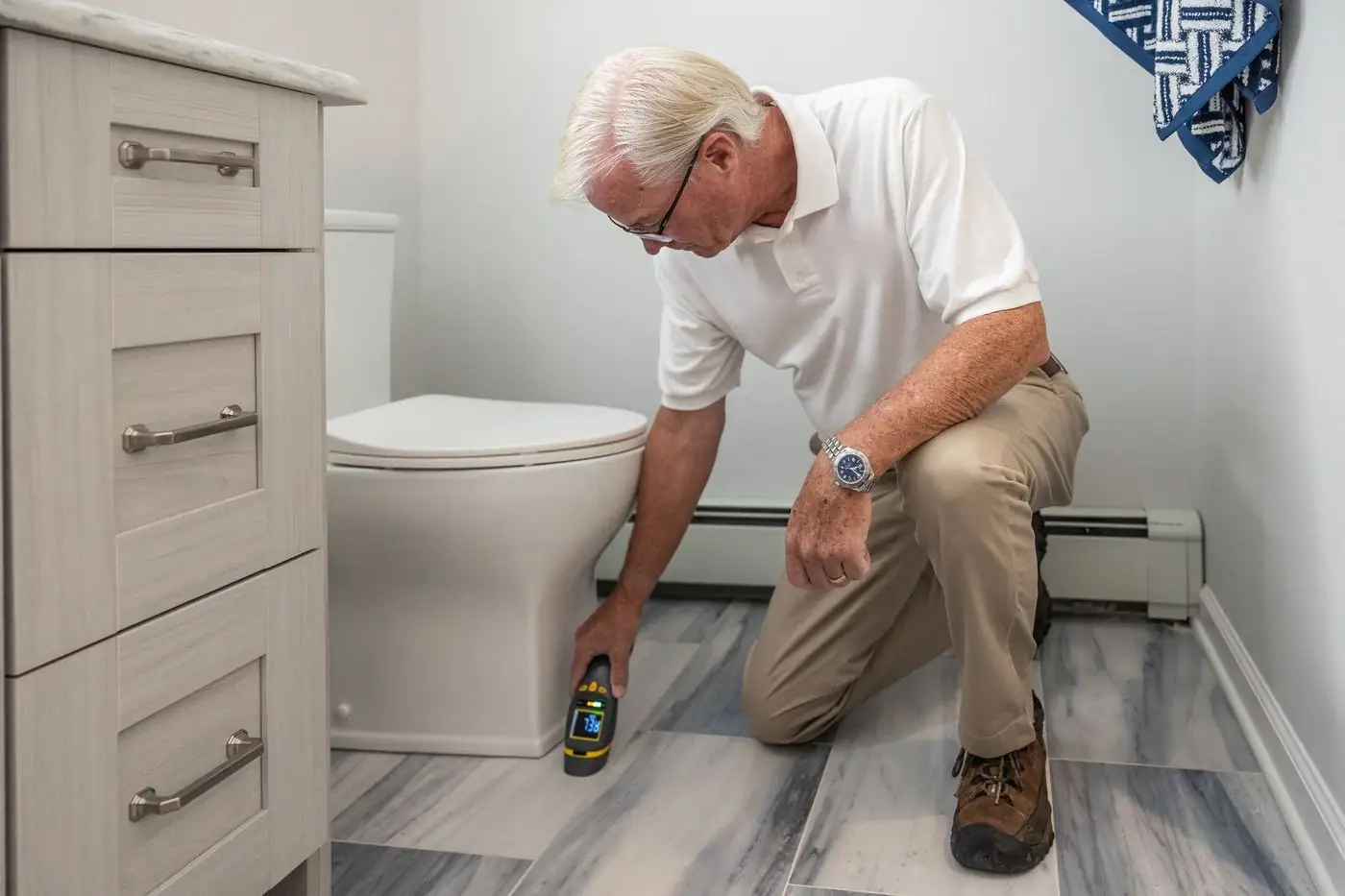
When the question is whether window condensation has soaked into the wall, Moisture Intrusion Testing from West Coast Mold Test answers it without cutting into drywall. Calibrated pin and pinless moisture meters measure how much water is in the sill, the drywall return and the wall below the window, and humidity readings show whether the room itself is driving the condensation. Where readings are elevated, the goal is to trace the source: indoor humidity on cold glass, rain getting past the window frame, or something else in the wall. FLIR Thermal Imaging can be added to map cold and damp areas around the frame.
Lab sampling is often not the first step here. The EPA notes that in most cases, if visible mold growth is present, sampling is unnecessary. The more useful answer for a window problem is where the water is coming from and how far into the wall it has gone, so you know whether better ventilation will solve it or whether the window or wall needs repair.
West Coast Mold Test only tests and inspects. There is no remediation or window repair to sell you, so if the wall around your window reads dry, that is exactly what the written report says. If your windows are wet every winter morning and you are seeing stains, soft drywall or spotting that keeps coming back, contact West Coast Mold Test to schedule moisture intrusion testing in Los Angeles, San Diego or the High Desert.