Yes: if your home has any history of leaks, stains or musty smells, or you simply do not know how the roof and windows handle heavy rain, now is the time to check it, before the first big storms arrive. NOAA's Climate Prediction Center expects a strong to very strong El Niño this winter, and Southern California historically has a better chance of a wet winter during strong events. A pre-rain check should focus on the places winter water actually gets in (roofs, window frames, slab edges and stucco) and on recording moisture readings now, so any change after the first storm is easy to spot.
What the El Niño Forecast Means for Southern California Homes
In its October 8, 2026 El Niño diagnostic discussion, NOAA's Climate Prediction Center kept an El Niño Advisory in effect and gave a greater than 83% chance of a strong to very strong El Niño lasting through January to March 2027. NOAA is careful to say that a larger event raises the chances of typical El Niño impacts without guaranteeing them.
For Southern California, the typical impact is rain. A NOAA Drought Task Force assessment found that Southern California has a stronger chance of wet conditions than Northern California during El Niño, that the effects tend to be greater in late winter than early winter, and that a very strong El Niño makes heavy precipitation more likely across the whole state. That is not a promise of any particular storm, but it is a good reason to treat this winter as a real test of the roof, windows and exterior walls of a Southern California home.
Why Homes That Stayed Dry for Years Are the Ones at Risk
A Southern California home can go through several dry winters without anyone learning that the roof underlayment has aged out, a window flashing has separated, or the soil next to the slab now slopes toward the house. Those weak points only show up under sustained, wind-driven rain. When water finds an opening that has never been tested, it tends to soak into drywall, insulation, subflooring or the back of the stucco, where nobody sees it until a stain or a smell appears.
The EPA puts the core rule simply: the key to mold control is moisture control. A house that has been dry for years and suddenly takes on water inside a wall cavity is exactly the setup for hidden mold growth, which is why the time to find entry points is before the rain, not after.
Where Winter Rain Gets Into Southern California Homes
Roofs, Flashing and Gutters
Tile roofs shed water well on the surface, but roof leaks usually come from the underlayment beneath the tile, the flashing at chimneys, skylights and wall junctions, and valleys packed with debris. The EPA recommends keeping roof gutters clean and repaired, since overflowing gutters pour water against fascia boards and walls. From inside, check the attic for dark spots on the underside of the roof deck and for stained or matted insulation.
Window Frames and Sliding Doors
Window and sliding door leaks show up as peeling paint, swollen trim, or stains below the lower corners of the frame. Wind-driven rain can push water past worn seals that never leak in a light shower. Condensation on the inside of the glass is a different problem, a sign of high indoor humidity rather than an outside leak, but the EPA treats it as a moisture source worth fixing too.
Slabs and Foundations
On a slab home, water that pools against the foundation can wick into baseboards, carpet tack strip and the bottom edge of drywall. The EPA advises making sure the ground slopes away from the foundation. Look for planters, hardscape or soil built up against the exterior wall, and for downspouts that empty right at the slab.
Stucco Walls
Stucco depends on the moisture barrier behind it and on flashing at windows and doors to keep water out. Cracks around window corners, at the base of walls and where stucco meets a roof line can let rain behind the finish, where it sits against framing and sheathing. Inside the house, the first signs are often bubbling paint, soft drywall or a musty smell in a single room along an exterior wall.
What a Pre-Season Moisture and Mold Baseline Looks Like
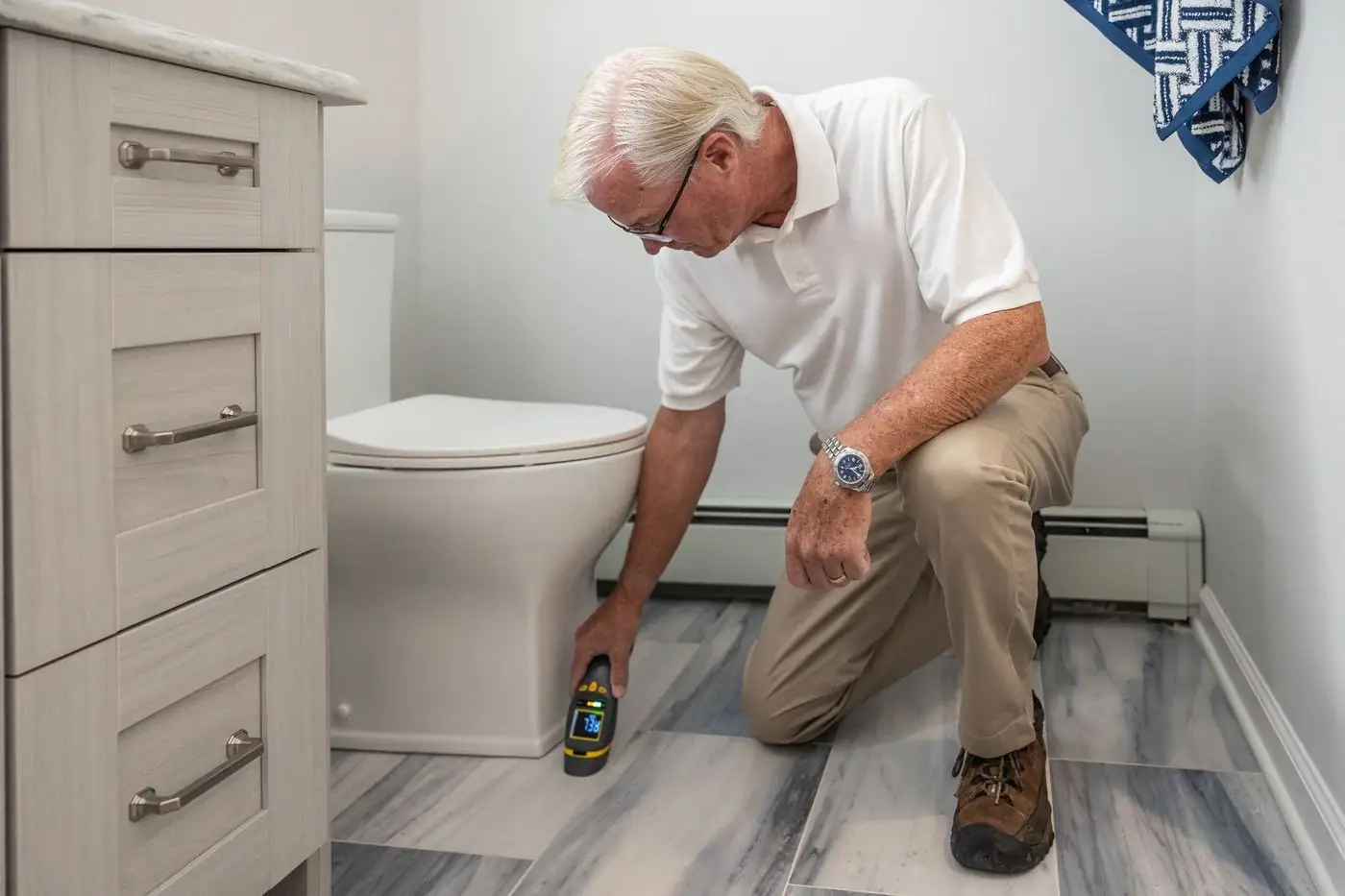
A baseline is a record of how dry the house is before the rain, so a reading taken after a storm has something to be compared against. For a Southern California home heading into an El Niño winter, a useful baseline starts with moisture meter readings at the usual entry points: ceilings below roof penetrations, walls under windows and sliders, exterior walls at the slab, and the areas around bathroom and kitchen plumbing.
Thermal imaging adds a wider view. FLIR thermal imaging can show cooler, damp areas behind intact ceilings and walls without opening anything up, which helps decide where the meter readings should go. A baseline should also note indoor humidity: the EPA recommends keeping it below 60 percent, ideally between 30 and 50 percent.
This is what West Coast Mold Test's moisture intrusion testing is built for. The visit measures moisture in drywall, framing and subfloors, traces where water is coming from, and ends with a written report of exact readings and locations that you can hand to a roofer, window installer or stucco contractor before storm season. Because West Coast Mold Test only tests and never performs repairs or remediation, there is no reason for the report to make a problem look bigger than it is.
What to Do After the First Big Storm If You See Staining or Smell Mustiness
A new stain, bubbling paint or a musty smell after the first heavy rain means water got into the house. Move quickly: the EPA says water-damaged areas and items should be dried within 24 to 48 hours to prevent mold growth.
Photograph the area, note which storm it followed and which way the wind was blowing, stop the water if you safely can, and dry what is wet with fans and a dehumidifier. Move soaked rugs, boxes and furniture out of the area. Do not paint over the stain, because the stain pattern is what tells a tester and a contractor where the water came from.
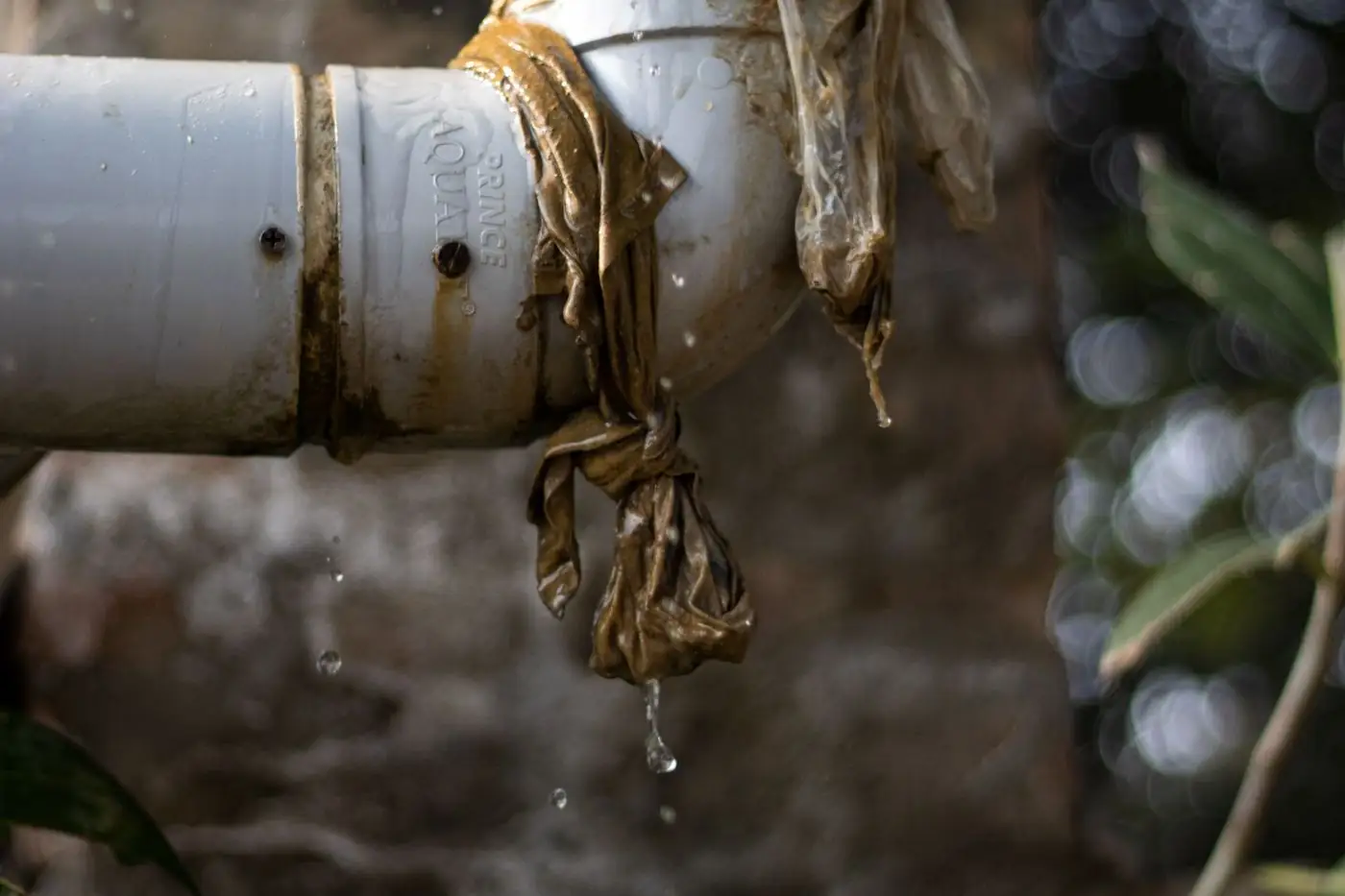
If mold is plainly visible, the EPA notes that sampling is usually unnecessary; the more useful question is how far the moisture has spread and where it entered. If there is a smell but nothing visible, or a stain keeps coming back after each storm, measured moisture testing can find the wet area behind the surface. For more on telling a rain entry point from a plumbing problem, see hidden leaks vs. moisture intrusion.
When to Book a Moisture Inspection Now Instead of Waiting
A pre-rain moisture inspection makes the most sense for Southern California homes with a past leak or stain that was patched but never confirmed dry, homes bought recently whose roof, windows and stucco have not been through a wet winter with you, homes with a musty smell that comes and goes, and rentals or second homes that sit empty during storms. In each of those cases a baseline taken now gives you something concrete to fix before the rain, and something to compare against after it.
If the house has no history of water problems, the attic and wall surfaces look clean, and nothing smells off, it is reasonable to clear the gutters, check the grading, and watch closely after the first storm instead. If something does show up, act within the drying window and book testing then.
West Coast Mold Test provides independent moisture and mold testing across Southern California, from Los Angeles and San Diego to the High Desert; see the full list of service areas. To get a baseline before the El Niño storms arrive, contact West Coast Mold Test and describe your home, or read more about moisture intrusion testing.